
3 Stages of Healing From Childhood Trauma - A Comprehensive Guide

Updated: Mar 30
Healing from childhood trauma is not a straight path. It is a journey that unfolds in stages, guided by safety, understanding, and patience. Many people feel confused or discouraged because they expect healing to happen quickly or in a neat order. In reality, the trauma recovery process is gradual and deeply human. Knowing the stages helps you understand what is happening inside your mind and body, and reminds you that nothing about your experience is “wrong.”
Understanding Childhood Trauma and Its Impact:
Childhood trauma happens when a child experiences events that feel overwhelming, unsafe, or emotionally painful, without the support needed to cope. This can include abuse, neglect, emotional harm, instability, or exposure to fear. Trauma can also be complex trauma or developmental trauma, meaning it happened repeatedly or during important stages of growth.

Some trauma is tied to relationships, such as attachment trauma, while other forms may come from family history (intergenerational trauma), identity-based trauma, or race-based trauma. No matter the source, trauma affects how the brain, body, and nervous system learn to survive.
Over time, these early experiences can shape identity formation, emotional regulation, and how a person relates to others. Trauma memories may stay active in the background, even when life seems calm on the surface.
Common Symptoms of Childhood Trauma:
Childhood trauma can affect both the mind and body, often in ways that are not immediately connected to early experiences. These symptoms are signs of the nervous system trying to protect itself, not personal weakness.
Symptoms can appear emotionally, physically, or behaviorally, and they may change over time as healing progresses.
Common symptoms include:
Anxiety, depression, or emotional dysregulation
Hypervigilance or strong startle response
Dissociation or feeling disconnected from the body
Trauma memories or intrusive memories
Avoidance behaviors and emotional numbness
Sleep disturbances and chronic fatigue
Chronic pain or unexplained somatic symptoms
Substance abuse or self-harm behaviors in some cases
With trauma-informed therapy, psychoeducation, and nervous system support, these symptoms can lessen as the stress response system learns safety again.
Why Healing Happens In Stages:
Trauma changes how the autonomic nervous system works. The stress response system becomes more sensitive, often stuck in fight, flight, or freeze response. The amygdala (the brain’s alarm system) stays on high alert, while the prefrontal cortex (the part that helps with logic and decision-making) may go offline under stress.
Because of this, healing cannot happen all at once. Most trauma-informed therapy follows a three-phase trauma framework:
Stabilization phase
Processing phase
Integration phase
Each stage supports the next, helping the nervous system slowly return to balance and safety within the window of tolerance.
The Stages of Healing From Childhood Trauma:
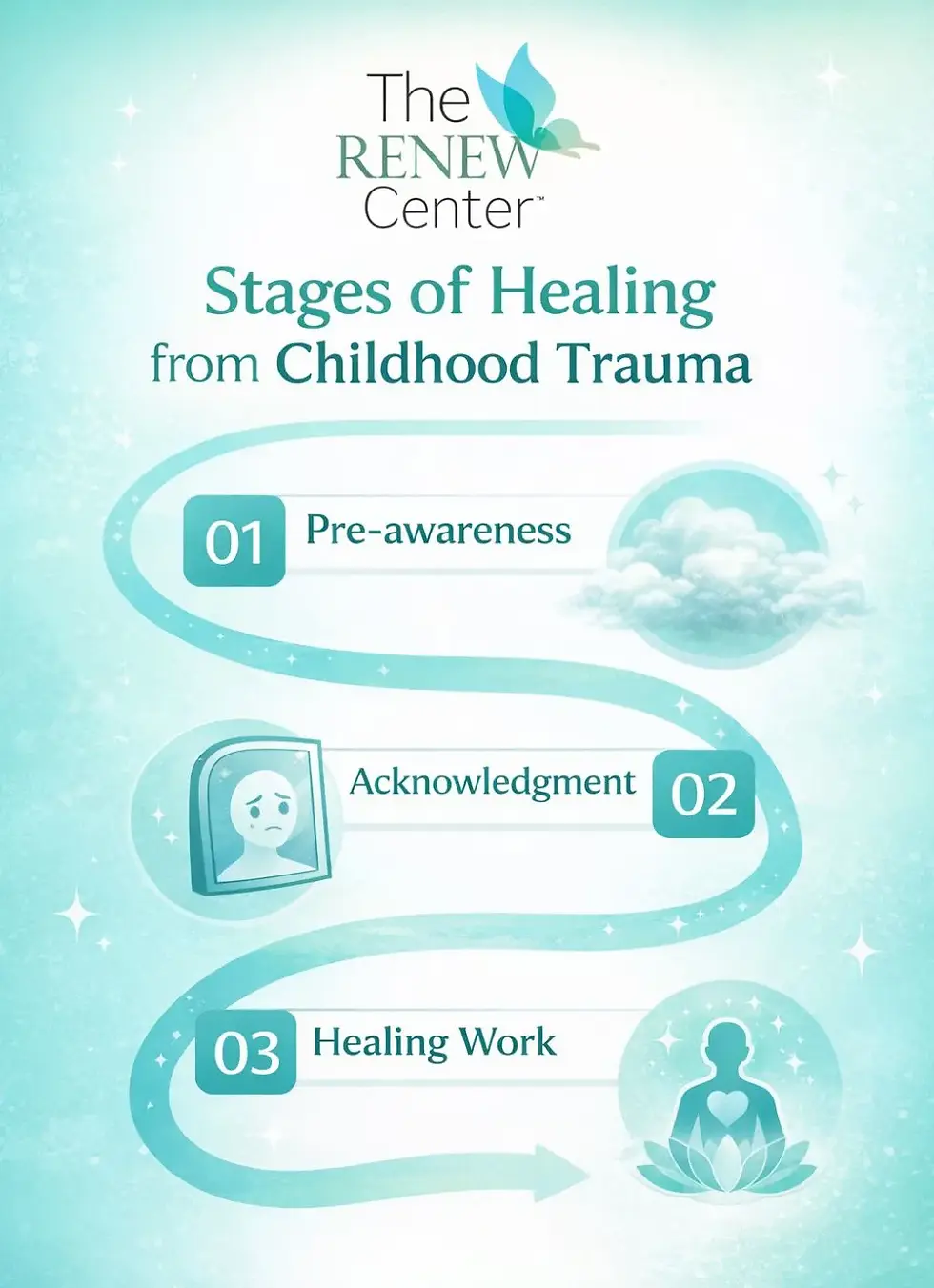
Stage One: Survival and Stabilization:
In the first stage, the main goal is safety. Many people are still living in survival mode, even if they don’t realize it. The nervous system may be stuck in hypervigilance, dissociation, or emotional numbness. Avoidance behaviors and defense mechanisms often develop here to protect against emotional overwhelm.
You may notice:
Anxiety or constant alertness
Difficulty sleeping or chronic tension
Emotional dysregulation or shutting down
Unconscious patterns that repeat in relationships
This stage is not about digging into trauma memories. It focuses on nervous system regulation, self-soothing, and learning basic coping skills. Trauma-informed therapy helps build stabilization so the body learns it is safe enough to heal.
Stage Two: Awareness and Emotional Processing:
Once stability improves, awareness grows. This is when many people begin connecting present struggles to childhood trauma. Emotional dysregulation may increase temporarily because feelings that were once buried start to surface.
This stage involves processing trauma memories, including intrusive memories, negative emotions, grief, and unmet needs. Grief processing is common—grief for lost safety, lost childhood experiences, or lost trust.
Therapies such as EMDR (Eye Movement Desensitization and Reprocessing), Internal Family Systems (IFS) Therapy, trauma-focused CBT, exposure therapy, and Somatic Experiencing can help during this phase. These approaches support emotional regulation skills, parts work, and mind-body therapy without overwhelming the nervous system.
Stage Three: Integration and Growth:
In the integration phase, trauma no longer controls daily life. Trauma integration means the past is remembered, but it no longer defines identity or reactions. Emotional regulation becomes more natural, and cognitive flexibility increases.
People often notice:
Fewer trauma triggers
Stronger boundary setting
Reduced self-criticism and increased self-compassion
Better meaning-making and resilience
This stage often includes post-traumatic growth, the ability to develop strength, insight, and deeper connection after healing. The nervous system becomes more balanced, and the window of tolerance expands.
How The Body Plays a Role In Healing Childhood Trauma?
Trauma lives in the body as much as in the mind. Somatic symptoms such as chronic pain, sleep disturbances, digestive issues, and psychophysiological responses are common. Healing includes mindful body awareness, grounding techniques, trauma-sensitive movement, and body scan practices.
Body-based approaches help release stored stress from the autonomic nervous system. They support self-soothing, reduce hypervigilance, and restore trust in bodily sensations.
Signs You’re Healing From Childhood Trauma:
Healing from childhood trauma often shows up in small, quiet ways before big changes happen. You may still have hard days, but your reactions begin to soften, and your nervous system recovers faster after stress. These signs mean your trauma recovery process is moving forward.
You might notice that trauma triggers don’t last as long as they used to. Emotional overwhelm feels more manageable, and emotional regulation becomes easier with practice. You may feel more connected to your body instead of dissociating or shutting down.
Common signs of healing include:
Feeling calmer after stress instead of staying stuck in fight, flight, or freeze
Less hypervigilance and fewer intrusive memories
Improved self-compassion and less self-criticism
Healthier boundary setting in relationships
Greater awareness of emotions without emotional numbness
Healing does not mean symptoms disappear completely. It means your nervous system has more flexibility, safety, and choice.
Emotional and Psychological Changes During Healing:
Healing involves learning emotional regulation rather than being controlled by emotional dysregulation. Negative core beliefs and cognitive distortions slowly soften. The thought–emotion–behavior connection becomes clearer, allowing healthier responses instead of automatic reactions.
As healing progresses:
Emotional overwhelm becomes easier to manage
Self-leadership strengthens
Coping skills replace survival patterns
Identity formation feels more stable and authentic
The Role of Therapy and Support:
Trauma healing is not meant to be done alone. Trauma-informed therapy emphasizes client-centered care, a strong therapeutic alliance, and clear treatment goals. Psychoeducation helps people understand what their mind and body are doing, reducing shame and fear.
Different therapy modalities support different needs, including:
DBT (Dialectical Behavior Therapy) for mindfulness, distress tolerance, and interpersonal effectiveness
CBT for cognitive distortions and negative core beliefs
Art therapy and expressive therapy for non-verbal healing
Mind-body therapy for integrated recovery
How Long Does It Take to Heal From Childhood Trauma?
There is no single timeline for healing from childhood trauma. The length of healing depends on many factors, including the type of trauma, whether it was complex trauma or developmental trauma, the presence of attachment trauma, and the level of support available.
Some people notice improvement within months, especially as nervous system regulation improves. For others, healing unfolds over years, moving through stabilization, processing, and integration phases at a steady and safe pace. Progress often happens gradually, not all at once.
Important things to remember:
Healing is not linear and may include setbacks
Deeper trauma may require longer inner work
Supportive, trauma-informed therapy can shorten recovery time
Growth continues even after symptoms improve
Healing is not about speed. It is about building lasting safety, resilience, and balance.
When to Seek Professional Help?
If trauma symptoms are interfering with daily life, relationships, or health, professional support is important. Conditions such as PTSD, anxiety, depression, substance abuse, self-harm, chronic pain, or severe emotional dysregulation benefit from guided care.
Why Choose The Renew Center of Florida for Trauma Therapy?
Choosing the right support for childhood trauma is a big decision. At The Renew Center of Florida, childhood trauma therapy is led by our premier therapist, Dr. Lisa Palmer, who brings 23 years of hands-on clinical experience working with childhood trauma, PTSD, and complex emotional wounds, here’s what sets our care apart:
Deep Expertise in Childhood Trauma:
Dr. Lisa Palmer has spent over two decades helping adults heal from early-life trauma, including developmental trauma, attachment wounds, and long-term trauma patterns that affect emotions, relationships, and self-worth. Her work focuses on both the root cause of trauma and its present-day impact.
Advanced Trauma-Focused Techniques:
Treatment is not one-size-fits-all. Dr. Palmer is highly experienced in evidence-based, trauma-informed approaches that support safe and lasting healing, including:
Trauma-focused therapy
Cognitive Behavioral Therapy (CBT)
Emotional regulation and nervous system stabilization
Trauma integration and resilience building
Working with dissociation, hypervigilance, and emotional shutdown
Support for co-occurring issues such as anxiety, depression, addiction, and eating disorders
Mind–Body Approach to Healing:
Childhood trauma often lives in the body, not just the mind. Therapy at The Renew Center addresses both psychological and physiological trauma responses, helping clients feel safer in their bodies, regulate emotions, and reduce chronic stress and pain linked to trauma.
Client-Centered, Safe, and Compassionate Care:
Healing happens at your pace. Dr. Palmer creates a calm, supportive space where clients feel heard, respected, and in control of their healing journey. Sessions focus on safety first, then gentle processing, followed by long-term growth and integration.
Experience with Complex and Long-Standing Trauma:
Many clients come after years of struggling or after trying therapy before without results. Dr. Palmer specializes in complex trauma cases, including:
Childhood emotional, physical, or relational trauma
PTSD and complex PTSD
Long-term emotional dysregulation
Trauma-related relationship difficulties
Trauma tied to identity, shame, or self-blame
At The Renew Center of Florida, childhood trauma therapy is grounded in experience, clinical skill, and genuine care. If childhood trauma is still shaping your life today, you don’t have to carry it alone. Professional, experienced support can make healing feel possible again.
A Final Word on the Healing Journey:
Healing from childhood trauma is not about becoming someone new. It is about returning to who you were meant to be before survival took over. The trauma recovery process honors your strength, protects your nervous system, and supports real, lasting change.
No matter where you are in the stages of healing, your experience is valid. With the right support, patience, and compassion, healing is possible, and growth can follow.
FAQs:
How Can I Tell If Childhood Trauma Is Still Affecting My Life?
Childhood trauma often continues to influence emotional responses, relationships, and self-perception long after the events themselves have passed. Patterns such as persistent anxiety, difficulty feeling safe, emotional reactivity, or repeated relationship struggles may indicate unresolved trauma influencing the nervous system and emotional regulation.
Is It Possible To Heal From Childhood Trauma As An Adult?
Yes, healing is possible at any stage of life. With trauma-informed therapy, the brain and nervous system can develop new patterns of safety, regulation, and resilience. Many individuals experience meaningful emotional relief, improved relationships, and a stronger sense of self through guided therapeutic work.
How Is Trauma Therapy Different From Traditional Talk Therapy?
Trauma therapy addresses both psychological and physiological responses to trauma. Rather than focusing only on insight or discussion, it emphasizes safety, nervous system regulation, emotional processing, and integration, helping individuals move beyond coping toward deeper, lasting healing.
Do I Need To Fully Remember My Trauma To Heal From It?
No. Healing does not require detailed recall of traumatic events. Trauma-focused therapy works with present-day emotional patterns, beliefs, and body responses that developed as a result of trauma, allowing healing to occur even when memories are fragmented or inaccessible.


